

Pregnancy is an important stage of life when nutrition plays a major role in the health and development of both the mother and baby. A balanced diet provides essential nutrients such as protein, iron, folate, calcium, iodine, vitamin D, and other vitamins and minerals needed during pregnancy. However, not every food or drink is equally safe during this period.
Some foods can increase the risk of food poisoning, while others may contain harmful bacteria, parasites, mercury, or excessive amounts of certain nutrients. Knowing which foods to avoid during pregnancy can help reduce preventable risks and support a healthier pregnancy.
It is important to remember that pregnancy does not mean you need to avoid a large number of foods. Most foods are safe when they are properly prepared, cooked, stored, and consumed in appropriate amounts. The focus should be on food safety, balanced nutrition, and following advice from your healthcare provider.
Why Is Food Safety Important During Pregnancy?
During pregnancy, changes in the immune system can make pregnant women more susceptible to certain foodborne infections. Infections such as listeriosis and toxoplasmosis can be particularly concerning during pregnancy and may affect the developing baby. The CDC notes that pregnant women are more likely to become seriously ill from certain foodborne germs, including Listeria.
Therefore, pregnant women should be especially careful with foods that are raw, undercooked, unpasteurized, improperly stored, or potentially high in mercury.
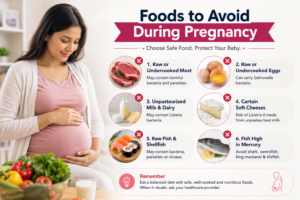
1. Raw or Undercooked Meat
Raw or undercooked meat should be avoided during pregnancy. This includes partially cooked chicken, meat, burgers, sausages, and other meat products.
Undercooked meat may contain harmful bacteria or parasites. Toxoplasmosis, for example, can be associated with raw or undercooked meat and can cause complications during pregnancy.
Meat should be cooked thoroughly until there is no visible pink or blood. Good kitchen hygiene is also important. Wash your hands, utensils, and preparation surfaces after handling raw meat.
2. Raw or Undercooked Eggs
Raw or partially cooked eggs can carry bacteria such as Salmonella. Pregnant women should generally choose eggs that are thoroughly cooked, with firm whites and yolks, unless the eggs are specifically considered safe for raw or lightly cooked consumption under local food-safety standards.
Be particularly careful with foods that may contain raw eggs, including homemade mayonnaise, mousse, certain desserts, raw batter, and some salad dressings.
3. Unpasteurized Milk and Dairy Products
Unpasteurized milk and dairy products should be avoided during pregnancy because they may contain harmful bacteria such as Listeria. Choose pasteurized milk, yogurt, cheese, and other dairy products instead.
When purchasing packaged dairy products, check the label to confirm that the product is pasteurized.
4. Certain Soft Cheeses
Some soft and mould-ripened cheeses can carry Listeria, particularly when they are made from unpasteurized milk or are eaten without adequate cooking.
Examples include certain varieties of Brie, Camembert, soft blue-veined cheeses, and similar products. Some soft cheeses made from pasteurized milk may be safe depending on local food-safety guidance, while cooking susceptible cheeses until steaming hot can reduce the risk.
Paneer, mozzarella, feta, cottage cheese, and cream cheese can be included when they are made from pasteurized milk and handled safely.
5. Raw Fish and Shellfish
Raw fish and raw shellfish should be avoided during pregnancy. This includes raw seafood used in sushi, sashimi, ceviche, and similar dishes.
Raw seafood may contain bacteria, parasites, or other contaminants that can cause foodborne illness. Shellfish should also be thoroughly cooked before consumption.
Cooked fish can be an excellent source of protein and nutrients during pregnancy, so avoiding raw seafood does not mean avoiding fish altogether.
6. Fish High in Mercury
Fish can provide important nutrients during pregnancy, including protein and omega-3 fatty acids. However, some large predatory fish can contain higher levels of mercury.
Fish such as shark, swordfish, and marlin should be avoided according to NHS guidance.
Instead, pregnant women can discuss safer low-mercury fish choices with their healthcare provider. The CDC lists options such as salmon, shrimp, pollock, catfish, and canned light tuna among lower-mercury choices.
7. Liver and Liver Products
Liver contains very high amounts of vitamin A. Excessive intake of preformed vitamin A during pregnancy can be harmful to the developing baby.
For this reason, pregnancy guidance recommends avoiding liver and liver products.
Do not take vitamin A supplements or other nutritional supplements containing high amounts of preformed vitamin A unless specifically recommended by your doctor.
8. Unwashed Fruits and Vegetables
Fresh fruits and vegetables are an important part of a healthy pregnancy diet, but they should be washed thoroughly before eating.
Unwashed produce may contain soil, bacteria, or parasites that can cause infection. Wash fruits, vegetables, and salad ingredients carefully under clean running water before consumption.
Pre-cut or ready-to-eat produce should also be handled carefully and stored according to the manufacturer’s instructions.
9. Raw Sprouts
Raw sprouts, including alfalfa and certain bean sprouts, can sometimes contain harmful bacteria. The CDC recommends choosing cooked sprouts during pregnancy rather than raw sprouts.
If sprouts are included in a meal, cooking them thoroughly until steaming hot can make them a safer choice.
10. Refrigerated Ready-to-Eat Foods
Certain refrigerated ready-to-eat foods can carry Listeria. These may include refrigerated pâté, meat spreads, some deli foods, pre-prepared salads, and refrigerated smoked seafood.
Food should be stored correctly, kept refrigerated, and consumed within the recommended use-by period. Some foods should be reheated until steaming hot before eating.
11. Cold Deli Meats and Processed Meat
Cold cuts, deli meats, hot dogs, and certain cured or fermented meats can carry bacteria if they are not handled or heated appropriately.
During pregnancy, follow local food-safety recommendations. The CDC advises reheating deli meats, cold cuts, and hot dogs until steaming hot before eating.
12. Unpasteurized Juices
Unpasteurized fruit or vegetable juices may contain harmful bacteria. Pregnant women should choose pasteurized juices or beverages instead.
Always check product labels, especially when buying fresh juices from shops, markets, or juice bars.
13. Alcohol
Alcohol should be avoided during pregnancy. There is no established safe amount of alcohol during pregnancy, and alcohol exposure can affect the developing baby.
Instead, choose water, milk, pasteurized juices, or other pregnancy-safe beverages. NHS guidance recommends avoiding alcohol during pregnancy because it can cause long-term harm to the baby.
14. Too Much Caffeine
Caffeine does not necessarily need to be completely eliminated, but intake should be limited during pregnancy.
NHS guidance recommends keeping caffeine intake to no more than 200 mg per day. Caffeine can be found in coffee, tea, cola, energy drinks, chocolate, and some supplements.
Because caffeine content varies between products, pregnant women should check serving sizes and labels when possible.
15. Certain Herbal Products and Supplements
Not every herbal product or supplement is automatically safe during pregnancy. Some herbal ingredients may not have enough safety information, while others may interact with medicines or have effects that are undesirable during pregnancy.
Therefore, avoid taking herbal supplements, weight-loss products, or other non-prescribed supplements without discussing them with your doctor.
How to Make Food Safer During Pregnancy
Avoiding certain foods is only one part of pregnancy food safety. Good food-handling habits are equally important.
Follow these simple practices:
- Wash your hands before preparing or eating food.
- Wash fruits and vegetables thoroughly.
- Keep raw meat and seafood separate from ready-to-eat foods.
- Cook meat, eggs, fish, and seafood thoroughly.
- Use pasteurized milk and dairy products.
- Refrigerate perishable foods promptly.
- Check expiry and use-by dates.
- Avoid foods that have been stored improperly.
- Keep kitchen surfaces and utensils clean.
The CDC summarizes food safety during pregnancy using four basic principles: clean, separate, cook, and chill.
What Foods Can You Eat During Pregnancy?
Avoiding certain foods does not mean that your diet needs to be restrictive. A healthy pregnancy diet should include a variety of nutritious foods.
Good choices can include:
- Fresh, thoroughly washed fruits and vegetables
- Whole grains
- Pulses and beans
- Nuts and seeds, if tolerated
- Thoroughly cooked eggs
- Well-cooked meat and poultry
- Pasteurized milk and dairy products
- Appropriate low-mercury fish
- Healthy sources of fats
- Adequate water and other suitable fluids
A balanced diet helps provide the nutrients required for maternal health and the baby’s growth and development.
What If You Accidentally Eat a Food You Should Avoid?
Accidentally eating a small amount of a food that is generally advised against does not automatically mean that something is wrong with your pregnancy. The appropriate response depends on what was eaten, how much was consumed, and whether symptoms develop.
If you feel unwell after eating potentially unsafe food, or develop symptoms such as persistent vomiting, diarrhea, fever, or other concerning symptoms, contact your healthcare provider promptly.
When Should You Talk to Your Doctor?
Every pregnancy is different. Women with diabetes, high blood pressure, food allergies, nutritional deficiencies, digestive disorders, or other medical conditions may require individualized dietary advice.
If you are unsure whether a particular food, supplement, drink, or herbal product is safe during pregnancy, it is best to ask your obstetrician or qualified healthcare professional before consuming it.
Conclusion
Knowing which foods to avoid during pregnancy is an important part of protecting the health of both mother and baby. Avoiding raw or undercooked foods, unpasteurized dairy products, high-mercury fish, alcohol, and other high-risk foods can help reduce the risk of foodborne infections and other pregnancy-related complications.
Every pregnancy is different, so personalized dietary guidance from a qualified obstetrician is important. If you are looking for expert maternity and pregnancy care, choosing the Best Hospital in Hyderabad can help you receive comprehensive care throughout your pregnancy.
For professional pregnancy guidance, regular prenatal care, and personalized nutritional advice, Book an Appointment with an experienced obstetrician today and take an important step toward a healthy pregnancy.
SEO Keywords: Best Hospital in Hyderabad, Pregnancy Care in Hyderabad, Pregnancy Nutrition, Foods to Avoid During Pregnancy, Pregnancy Diet, Obstetrician in Hyderabad, Maternity Care in Hyderabad, Book an Appointment