

A stroke is a medical emergency that can develop within seconds and change a person’s life just as quickly. It happens when blood flow to part of the brain is interrupted or when a blood vessel in the brain ruptures. Because brain cells depend on a constant supply of oxygen, delayed treatment can lead to permanent brain damage, disability, or death.
The good news is that many strokes can be recognized early. Knowing the warning signs and acting immediately can improve the chances of successful treatment and recovery.
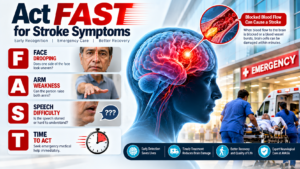
One of the simplest and most effective ways to identify a possible stroke is to remember the word FAST.
What Is a Stroke?
A stroke occurs when the brain does not receive enough blood and oxygen.
The two main types are ischemic stroke and hemorrhagic stroke.
An ischemic stroke occurs when a blood clot blocks an artery supplying blood to the brain. This is the most common type of stroke.
A hemorrhagic stroke occurs when a blood vessel in or around the brain breaks and causes bleeding.
Although the causes are different, both require immediate medical attention. Only proper medical evaluation and brain imaging can determine which type of stroke has occurred and which treatment is appropriate.
Recognize the Signs with FAST
FAST is an easy way to remember some of the most common stroke warning signs.
F – Face Drooping
Ask the person to smile.
If one side of the face appears to droop, feels numb, or the smile looks uneven, it may be a sign of stroke.
Sudden facial weakness should never be ignored, especially when it appears without an obvious reason.
A – Arm Weakness
Ask the person to raise both arms.
If one arm drifts downward, feels weak, becomes numb, or cannot be lifted properly, it may indicate that part of the brain is not functioning normally.
Weakness may also affect one side of the body, including the leg.
S – Speech Difficulty
Ask the person to repeat a simple sentence.
Watch for slurred speech, difficulty finding words, unusual speech, confusion, or an inability to understand what others are saying.
Sudden changes in speech are among the most important signs of a possible stroke.
T – Time to Act
If any of these symptoms are present, seek emergency medical help immediately.
Do not wait to see whether the symptoms improve.
It is also important to note the time when symptoms first began, or the last time the person was known to be normal. This information can help doctors determine which treatment options may be suitable.
Other Stroke Symptoms to Watch For
FAST covers several common stroke symptoms, but strokes do not always present in the same way.
Other warning signs may include sudden dizziness, loss of balance, difficulty walking, blurred vision, double vision, sudden loss of vision, confusion, severe headache, numbness, or weakness on one side of the body.
Some stroke awareness campaigns also use BE FAST, adding:
B – Balance: sudden dizziness, unsteadiness, or loss of coordination.
E – Eyes: sudden changes in vision in one or both eyes.
The word “sudden” is especially important. If a person develops these symptoms abruptly, stroke should be considered a medical emergency.
Why Early Treatment Matters
During a stroke, brain cells can begin to die because they are not receiving enough oxygen.
This is why doctors often say, “Time is brain.”
The faster blood flow can be restored, the greater the possibility of limiting permanent brain damage.
Some patients with ischemic stroke may be eligible for clot-dissolving medicines. In selected cases, doctors may also perform procedures to remove a blood clot from a blocked artery.
However, these treatments are time-sensitive and depend on several factors, including when symptoms began, the type of stroke, imaging findings, and the patient’s medical history.
Delaying hospital care can reduce the number of treatment options available.
Do Not Ignore Symptoms That Disappear
Sometimes stroke-like symptoms last only a few minutes and then disappear.
This may be a Transient Ischemic Attack, commonly known as a TIA or mini-stroke.
A TIA occurs when blood flow to the brain is temporarily interrupted. The symptoms may resolve completely, but that does not mean the danger has passed.
A TIA can be an important warning sign that a full stroke may occur later.
Anyone who experiences temporary facial weakness, arm weakness, speech difficulty, vision changes, dizziness, or numbness should seek urgent medical evaluation even if they feel normal again.
What to Do During a Suspected Stroke
If you suspect that someone is having a stroke, the most important step is to seek emergency medical assistance immediately.
Keep the person safe and comfortable while waiting for medical help.
Do not give food or drinks because stroke can affect swallowing and increase the risk of choking.
Do not give medicines, including aspirin, unless specifically advised by a healthcare professional. Some strokes are caused by bleeding, and medications that affect blood clotting may make the situation worse.
Do not try to drive long distances looking for a preferred doctor if emergency medical services are available. Stroke care is time-sensitive, and prompt hospital evaluation is critical.
Who Is at Risk of Stroke?
A stroke can affect anyone, but some people have a higher risk.
Major risk factors include high blood pressure, diabetes, high cholesterol, smoking, obesity, physical inactivity, certain heart conditions, and an unhealthy diet.
Atrial fibrillation, an irregular heart rhythm, can also increase stroke risk because it can lead to blood clots forming in the heart.
Age and family history may also influence risk, although these factors cannot be changed.
Regular health checkups and proper management of blood pressure, blood sugar, and cholesterol can help reduce stroke risk.
Can Stroke Be Prevented?
Not every stroke can be prevented, but many risk factors can be controlled.
Maintaining healthy blood pressure is one of the most important preventive steps.
People with diabetes should keep their blood sugar under control and follow their doctor’s treatment plan.
Managing cholesterol, avoiding tobacco, staying physically active, eating a balanced diet, maintaining a healthy weight, and limiting excessive alcohol intake can also support cardiovascular and brain health.
Patients who have already had a stroke or TIA may need medicines and regular follow-up to reduce the risk of another event.
Stroke Recovery and Rehabilitation
Recovery after stroke varies from person to person.
Some patients may recover quickly, while others may experience long-term problems with movement, speech, memory, balance, or daily activities.
Rehabilitation may include physiotherapy, occupational therapy, speech therapy, swallowing therapy, and neurological follow-up.
Early rehabilitation can help patients regain function and improve independence.
However, the foundation of stroke recovery begins with early recognition and prompt treatment.
When Should You Go to the Hospital?
Seek emergency care immediately if a person suddenly develops facial drooping, weakness or numbness on one side of the body, difficulty speaking, confusion, loss of balance, vision changes, or a severe unexplained headache.
Even one symptom can be enough to suspect a stroke.
Do not wait for several symptoms to appear.
Do not wait for the person to “sleep it off.”
Do not assume the symptoms are caused by stress, fatigue, or low blood pressure.
When it comes to stroke, acting quickly can make a major difference.
Final Thoughts
Stroke can happen without warning, and recognizing the early signs can save valuable time. Remember FAST — Face drooping, Arm weakness, Speech difficulty, and Time to seek emergency help.
If you notice sudden weakness, facial drooping, speech problems, vision changes, severe dizziness, or loss of balance, seek immediate medical attention. Choosing the best hospital in Hyderabad with timely emergency and neurological care can make a critical difference in diagnosis, treatment, and recovery.
For expert consultation and timely medical support, book appointment with an experienced healthcare team and get the right care without delay.