

Blood is one of the most important systems in the human body. It carries oxygen, fights infections, helps control bleeding, and transports nutrients and hormones throughout the body. Every day, your bone marrow produces millions of new blood cells to replace old or damaged cells.
But what happens when blood cells become abnormal?
Abnormal blood cells may not function properly, may grow uncontrollably, or may interfere with the production of healthy blood cells. Depending on which blood cells are affected and how severely they are affected, a person may develop symptoms ranging from tiredness and frequent infections to unexplained bleeding or other serious complications.
Understanding what happens inside the body can help people recognize warning signs and seek medical attention at the right time.
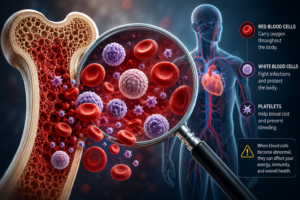
What Are Blood Cells?
Blood mainly contains three types of cells:
1. Red Blood Cells
Red blood cells, also called RBCs, carry oxygen from the lungs to different parts of the body and bring carbon dioxide back to the lungs.
When red blood cells are too few, too small, or abnormal, the body may not receive enough oxygen. This can result in anemia, which may cause:
- Persistent tiredness
- Weakness
- Dizziness
- Shortness of breath
- Pale skin
- Headaches
- Reduced ability to concentrate
2. White Blood Cells
White blood cells, or WBCs, are an important part of the immune system. They help the body fight bacteria, viruses, fungi, and other infections.
If white blood cells are too low, the body may have difficulty fighting infections. If certain white blood cells become abnormal and multiply uncontrollably, they can interfere with normal blood cell production.
This can occur in conditions such as leukemia and other blood cancers.
3. Platelets
Platelets help the blood clot when a blood vessel is damaged.
When platelet levels are too low or the platelets do not function properly, a person may experience:
- Easy bruising
- Frequent nosebleeds
- Bleeding gums
- Small red or purple spots on the skin
- Heavy menstrual bleeding
- Bleeding that takes longer to stop
Where Are Blood Cells Made?
Most blood cells are produced inside the bone marrow, the soft tissue found inside many bones.
Bone marrow contains special blood-forming stem cells. These cells develop into different types of blood cells depending on what the body needs.
Normally, this process is carefully controlled. Old blood cells are removed while new cells are continuously produced.
However, genetic changes, certain diseases, nutritional deficiencies, infections, medications, or other conditions can disrupt this process.
When abnormal cells develop, they may grow too quickly, fail to mature properly, or prevent healthy blood cells from being produced.
What Happens When Abnormal Cells Start Increasing?
One of the major concerns occurs when abnormal blood cells begin multiplying rapidly.
Imagine the bone marrow as a factory producing red blood cells, white blood cells, and platelets. If abnormal cells take over the factory, there may not be enough space or resources to produce healthy cells.
As healthy blood cell production decreases, different symptoms can develop.
Low Red Blood Cells – Anemia
If abnormal cells interfere with red blood cell production, the number of healthy RBCs may fall.
As a result, less oxygen reaches tissues and organs. The person may feel unusually tired or weak and may become breathless during routine activities.
Low Healthy White Blood Cells – Increased Infection Risk
Abnormal cells may reduce the production of healthy infection-fighting white blood cells.
This can make a person more vulnerable to infections or cause infections to occur repeatedly.
Some patients may develop:
- Persistent or recurrent fever
- Frequent infections
- Slow recovery from infections
- Unexplained weakness
Low Platelets – Bleeding Problems
When abnormal cells crowd the bone marrow, platelet production may decrease.
This can cause easy bruising, nosebleeds, bleeding gums, or other unusual bleeding.
Why Do Blood Cells Become Abnormal?
There is no single cause for every abnormal blood cell condition.
Some abnormalities are related to genetic changes that occur in blood-forming cells. These changes can affect how cells grow, divide, mature, and die.
Other causes may include:
- Nutritional deficiencies
- Certain infections
- Autoimmune conditions
- Bone marrow disorders
- Exposure to certain chemicals or radiation
- Some medications
- Genetic conditions
- Certain cancers
In many blood cancers, the exact reason why a particular genetic change occurred may not be known.
It is important to remember that having an abnormal blood test does not automatically mean that a person has cancer. Many non-cancerous conditions can also cause abnormal blood counts.
What Symptoms Should You Watch For?
Blood disorders can sometimes develop gradually, and early symptoms may appear similar to common health problems.
Some warning signs that deserve medical evaluation include:
- Persistent or unexplained fatigue
- Frequent infections
- Unexplained fever
- Unusual weight loss
- Easy bruising
- Unexplained bleeding
- Pale skin
- Persistent bone or joint pain
- Swollen lymph nodes
- Excessive night sweating
- Shortness of breath
- Persistent weakness
Having one of these symptoms does not necessarily mean you have a blood disorder. However, persistent, unexplained, or worsening symptoms should not be ignored.
How Are Abnormal Blood Cells Detected?
A Complete Blood Count (CBC) is often one of the first tests used to evaluate blood cell levels.
A CBC can provide information about:
- Red blood cell count
- Hemoglobin levels
- White blood cell count
- Platelet count
- Other blood cell measurements
If the results are abnormal, a doctor may recommend additional tests depending on the situation.
These may include a peripheral blood smear, iron and vitamin tests, infection-related tests, imaging studies, or specialized blood and bone marrow tests.
In some cases, a bone marrow examination may be necessary to understand how blood cells are being produced and whether abnormal cells are present.
What Is the Role of Bone Marrow Testing?
A bone marrow test can provide important information about the blood-forming system.
During the procedure, a small sample of bone marrow is collected, usually from the hip bone. The sample can then be examined under a microscope and may undergo specialized laboratory testing.
Depending on the suspected condition, doctors may use tests such as flow cytometry, cytogenetic testing, or molecular testing.
These investigations can help identify specific abnormalities and guide treatment decisions.
Can Abnormal Blood Cells Be Treated?
Treatment depends entirely on the underlying cause.
For nutritional deficiencies, treatment may involve replacing the deficient nutrient.
For infections or inflammatory conditions, treating the underlying problem may improve blood counts.
For blood cancers and certain serious bone marrow disorders, treatment may involve:
- Chemotherapy
- Targeted therapy
- Immunotherapy
- Supportive care
- Blood or platelet transfusions
- Stem cell or bone marrow transplantation
Not every patient needs the same treatment. The treatment plan depends on the specific diagnosis, disease stage, genetic characteristics, overall health, age, and other individual factors.
Why Early Evaluation Matters
Some blood disorders can progress quickly, while others develop slowly.
Early evaluation can help doctors identify the underlying problem and determine the appropriate treatment before complications develop.
A simple blood test may sometimes provide the first clue that something is not functioning normally inside the body.
However, one abnormal blood test should not immediately cause panic. Blood counts can change temporarily due to infections, medications, dehydration, nutritional deficiencies, and other conditions.
The important step is to understand why the blood count is abnormal.
When Should You Consult a Specialist?
You should consider medical evaluation if you have persistent unexplained symptoms or repeatedly abnormal blood test results.
A hematologist or hemato-oncologist can evaluate abnormalities involving blood cells, bone marrow, lymph nodes, and related conditions.
If a doctor recommends additional testing, completing the evaluation can help identify the cause and ensure that appropriate treatment is started when necessary.
Conclusion
Abnormal blood cells can affect your body in different ways, from persistent fatigue and frequent infections to unusual bleeding and other serious health concerns. An abnormal blood test does not always mean cancer, but identifying the underlying cause at the right time is important for accurate diagnosis and treatment.
Choosing the best hospital in Hyderabad and consulting the best hematologist in India can help you receive expert evaluation, personalized treatment, and appropriate care for blood and bone marrow disorders.
If you are concerned about abnormal blood counts or related symptoms, Book an Appointment with a qualified specialist and take the right step toward better blood health.