

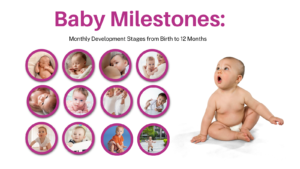
The first year of a child’s life is full of rapid growth and changes that are visible. From the initial smile to the first steps, each month is filled with new learning. Knowing the milestones of babies assists parents in tracking the normal development of their child, spotting any issues early, and offering adequate stimulation for their child at the proper moment. Although every child develops according to their own individual pace, these milestones for each month provide useful information on what babies typically achieve between the time of birth and 12 months.
Month 1: Adapting to the World
Newborns spend the majority of their time asleep and eating. They move based on reflexes.
Common baby milestones
-
Responds to loud sounds
-
Brief eye contact
-
Legs and arms move randomly
-
Recalls the voice of the mother
Tips for parents: Skin-to-skin contact and speaking softly can help bonding and the development of sensory perception.
Month 2 Social Smiles Start
Your child starts reacting to voices and faces.
Milestones for babies
-
Social smiles appear
-
Eyes follow objects using eyes
-
Coos as well as makes a tiny sound
-
Head control improved while lying on the stomach
Tips for parents: Encourage tummy time each day to strengthen neck muscles.
Month 3: Better Head Control
The strength of the neck increases, and babies are more alert.
Milestones for babies
-
Keeps head steady
-
Places hands on mouths
-
Smiles at people you know
-
Monitors moving objects
Tips for parents: Use colorful toys to aid in visual tracking.
Month 4: The rolling Starts
This is a busy month with a lot of activity.
Milestones for babies
-
The roll is from the tummy up to the back
-
Blows and laughs
-
Searches for toys
-
Recognizes caregivers
Parents’ tip: Create a secure floor area for exercise.
The 5th month of the year: Exploring hands
Babies begin to learn by touching.
Milestones for babies
-
Grasps objects with a firm grip
-
Injects toys into the mouth
-
Responds to sound
-
Shows curiosity
Tips for parents: Offer soft rattles and toys with textures.
The 6th month of the year: sitting with support
About halfway through their first year of life, babies are showing strong physical and social development.
baby milestones
-
Sits on support and bolsters
-
Transfers objects between hands
-
Responds to the name
-
Starts eating solid foods (after parental advice)
Tip for Parents: Talk to your baby while feeding them to help build connections.
7. Month: Sitting and Not Having Support
Improved posture and independence.
baby milestones
-
Sits on the ground without any support
-
Babbles repetitively (ba-ba da-da)
-
Recognizes people who are not familiar with them.
-
Searches for distant objects
Tips for parents: Play peek-a-boo to build memory and recognition.
Month 8: Crawling Attempts
The mobility of people increases dramatically.
baby milestones
-
Then begins to crawl or scoot
-
Stands with support and pulls back
-
Understands simple words like “no.”
-
Displays affection for parents.
Tips for parents: Baby-proof the house for security.
Month 9: Stand with Support
Babies are more adventurous.
baby milestones
-
Furniture is held on stands
-
Picks up small objects with finger (pincer grasp)
-
Imitates sounds
-
Waves goodbye
Parent tip: Encourage safe cruising along furniture.
Month 10: Cruising Around
Your baby is getting ready to walk.
Milestones for babies
-
Walking with furniture and walking
-
Learns to follow simple instructions
-
Says simple syllables
-
Makes eye contact with objects
Parents’ tip: Make sure you encourage walking using help rather than with walkers.
month 11: confidence in Movement
Balance and coordination are improved.
Milestones for babies
-
It briefly stands without support
-
Responds to requests for simple information
-
Recognizes familiar objects
-
You will enjoy games that are interactive
Parents’ tip: Read picture books to improve your recognition skills.
Month 12: The First Steps and the First Words
A significant milestone month.
Milestones for babies
-
May be able to take the first steps independently
-
Says 1-2 meaningful words
-
Drinks from cups with assistance
-
Displays clear preferences
Tips for parents: Celebrate progress and keep promoting speech.
Important Areas of Development
In these stages of development for babies, the development process takes place in five major areas:
-
Gross motor abilities such as sitting, crawling, and walking
-
Fine motor skills—grasping, picking up objects
-
Language abilities—babbling, cooing, and the first words
-
Social skills—smiling, recognizing people
-
Cognitive abilities—memory, curiosity, and response
When should you consult a pediatrician?
While it’s normal for variations to occur, seek medical advice in the event of:
-
No smile in the public eye within 3 months
-
Head control issues by 4 months
-
Not sat down for 9 months.
-
There was no babbling until 8 months old.
-
Not being supported for 12 months
Evaluations early will allow prompt intervention should it be required.
How parents can help support their baby’s milestones
-
Give tummy time every day
-
Sing, talk, and read often
-
Provide safe toys with a variety of textures
-
Ensure proper nutrition
-
Maintain vaccination schedule
-
Pay attention to your emotional well-being and give yourself a warm hug.
Conclusion
Monitoring the milestones of babies from the time of birth until 12 months can help parents to understand their child’s development process. Each baby is different; knowing these milestones can help you encourage the development of your child, as well as ensure safety and spot issues early. If you take care of them, stimulate them, and love them, children can achieve the milestones they need to be able to do naturally and easily within their first year of life.
Worried about your baby’s milestones?
Consult our pediatric experts at Avasa Hospital for proper evaluation and guidance.