

Turning 40 is an important milestone for your overall health. While many people focus on maintaining a healthy weight, managing stress, and keeping their heart healthy, bone health is often overlooked. However, bones are living tissues that continuously change throughout life, and the habits you develop in your 40s and beyond can play an important role in maintaining strong and healthy bones.
As we age, the body’s ability to build and maintain bone tissue gradually changes. This makes it increasingly important to pay attention to nutrition, physical activity, lifestyle choices, and regular healthcare.
The good news is that maintaining healthy bones does not necessarily require complicated changes. Consistent everyday habits can support bone strength and help you remain active and independent as you grow older.
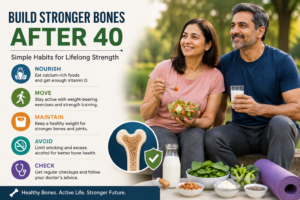
Why Bone Health Becomes More Important After 40
Bones provide structure, protect vital organs, support movement, and store important minerals such as calcium. Throughout childhood and early adulthood, the body builds bone mass. Bone strength generally reaches its peak during early adulthood, after which maintaining existing bone becomes increasingly important.
After 40, factors such as aging, hormonal changes, reduced physical activity, nutritional deficiencies, and certain lifestyle habits can influence bone health.
For women, changes associated with menopause can have a significant impact on bone health because declining estrogen levels can accelerate bone loss. Men can also experience gradual changes in bone density as they age.
This does not mean that weaker bones are unavoidable. Paying attention to bone-friendly habits can help support skeletal health throughout adulthood.
Calcium: A Key Building Block for Strong Bones
Calcium is one of the most important minerals for maintaining healthy bones. Your body also needs calcium for other functions, including muscle contraction and normal nerve activity.
If your diet does not provide enough calcium, the body can draw calcium from bones to support other essential functions. Over time, inadequate calcium intake may affect bone strength.
Good dietary sources of calcium include:
- Milk and yogurt
- Cheese and other dairy products
- Leafy green vegetables
- Ragi and other calcium-rich grains
- Sesame seeds
- Tofu
- Certain fish eaten with their edible bones
- Calcium-fortified foods
Instead of relying on a single food, aim for a balanced diet that provides calcium regularly.
If you are considering calcium supplements, it is best to discuss them with a healthcare professional because individual nutritional requirements vary.
Don’t Forget Vitamin D
Calcium works closely with vitamin D. Vitamin D helps the body absorb calcium and plays an important role in maintaining healthy bones and muscles.
One of the natural sources of vitamin D is sunlight. Spending appropriate amounts of time outdoors can support vitamin D production, although factors such as skin type, location, season, clothing, age, and sun exposure habits can influence how much vitamin D the body produces.
Foods that contain vitamin D include fatty fish, egg yolks, fortified dairy products, and fortified foods.
Some people may have difficulty getting enough vitamin D from sunlight and diet alone. A healthcare professional can advise whether testing or supplementation is appropriate.
Make Weight-Bearing Exercise Part of Your Routine
Bones respond to physical activity. Regular weight-bearing exercise encourages the body to maintain bone strength and also supports muscle strength and balance.
Examples include:
- Brisk walking
- Stair climbing
- Dancing
- Hiking
- Jogging, when appropriate
- Resistance training
- Bodyweight exercises
You do not necessarily need an intense workout routine. Consistency is more important.
For people who have not exercised regularly, starting gradually and increasing activity over time can be a practical approach.
Strength training is particularly valuable because stronger muscles support the bones and can improve balance and functional movement.
Strengthen Your Muscles Along With Your Bones
Bone health and muscle health are closely connected.
As people age, muscle mass and strength can gradually decline if they are not maintained through regular activity. Weak muscles can affect balance and mobility.
Resistance exercises using weights, resistance bands, or body weight can help maintain muscle strength.
Simple movements such as squats, step-ups, wall push-ups, and supervised resistance exercises can become part of a well-rounded fitness routine.
If you have an existing medical condition or have been inactive for a long period, speak with a healthcare professional before beginning a new exercise program.
Maintain a Healthy Body Weight
Both very low and excessive body weight can influence overall skeletal health.
Maintaining a healthy weight helps support mobility, muscle function, and physical activity. A balanced approach to nutrition and exercise is generally more sustainable than extreme diets or rapid weight-loss programs.
Rather than focusing only on the number on the weighing scale, consider overall fitness, muscle strength, dietary quality, and daily activity.
A healthy lifestyle supports not only your bones but also your heart, muscles, joints, and metabolic health.
Limit Smoking and Excessive Alcohol
Lifestyle choices can have a significant influence on long-term bone health.
Smoking is associated with poorer bone health and can interfere with the body’s ability to maintain healthy bone tissue. If you smoke, quitting can benefit your bones as well as your cardiovascular and respiratory health.
Excessive alcohol consumption can also negatively affect bone health and increase the risk of falls and injuries.
Reducing alcohol intake and avoiding tobacco are important steps toward a healthier lifestyle after 40.
Pay Attention to Protein Intake
Protein is often discussed in relation to muscles, but it also contributes to bone structure and overall physical strength.
Adequate protein intake can help support muscle mass, which is particularly important as we age.
Healthy protein sources include:
- Eggs
- Fish
- Lean meats
- Milk and yogurt
- Dal and lentils
- Beans
- Chickpeas
- Soy products
- Nuts and seeds
A balanced diet that combines adequate protein with vegetables, fruits, whole grains, and healthy fats can support overall nutritional health.
Focus on Balance and Flexibility
Strong bones are important, but preventing falls is also an important part of healthy aging.
Balance and flexibility exercises can help improve body control and mobility. Activities such as yoga, tai chi, stretching, and balance exercises can be useful additions to a fitness routine.
Keeping your home environment safe is also important. Good lighting, clear walking areas, supportive footwear, and appropriate handrails can reduce avoidable hazards.
Regular Health Checkups Matter
Bone health should be considered as part of overall preventive healthcare.
Depending on your age, sex, family history, lifestyle, medications, and other health factors, your healthcare provider may recommend specific evaluations related to bone health.
A bone density test, commonly known as a DEXA or DXA scan, may be recommended for certain individuals based on age and risk factors.
It is important not to assume that everyone needs the same screening schedule. Your healthcare professional can determine what is appropriate for you.
Bone Health for Women After Menopause
Women should pay particular attention to bone health around and after menopause.
Estrogen plays an important role in maintaining bone tissue, and declining estrogen levels during menopause can accelerate bone loss.
This makes nutrition, exercise, adequate vitamin D and calcium intake, and appropriate medical guidance especially important during this stage of life.
Women approaching or going through menopause can discuss their individual bone-health needs with their healthcare provider.
Small Daily Habits Can Make a Big Difference
Protecting your bones after 40 does not have to involve dramatic lifestyle changes.
You can start with simple habits:
- Walk regularly
- Include strength exercises in your routine
- Eat calcium-rich foods
- Maintain adequate vitamin D
- Consume enough protein
- Avoid smoking
- Limit excessive alcohol
- Maintain a healthy weight
- Practice balance exercises
- Stay physically active
- Attend recommended health checkups
The key is consistency. Healthy habits followed over many years can contribute significantly to maintaining mobility and independence.
Conclusion
Bone health becomes increasingly important after 40, and simple habits such as regular exercise, a balanced diet, adequate calcium and vitamin D, healthy weight management, and avoiding smoking can support stronger bones and better mobility. If you are looking for a best orthopedic hospital for expert guidance and comprehensive orthopedic care, choosing an experienced healthcare team can help you take the right steps for your long-term bone and joint health. Book appointment with a qualified orthopedic specialist to discuss your individual bone health needs and maintain an active, healthy lifestyle as you age.