

Chemotherapy is one of the most widely used treatments in cancer care, especially in haemato-oncology, where it plays a crucial role in managing blood cancers such as leukemia, lymphoma, and multiple myeloma. While many people have heard of chemotherapy, there is often confusion, fear, and uncertainty about what actually happens during the process. Understanding chemotherapy can help patients and families feel more informed, prepared, and confident during treatment.
What Is Chemotherapy?

Chemotherapy refers to the use of powerful drugs to destroy cancer cells. These drugs target rapidly dividing cells, which is a key characteristic of cancer. In haemato-oncology, chemotherapy works throughout the body via the bloodstream, making it highly effective in treating cancers that affect blood, bone marrow, and lymphatic systems.
Unlike surgery or radiation, which focus on specific areas, chemotherapy is considered a systemic treatment, meaning it can reach cancer cells almost anywhere in the body.
Why Is Chemotherapy Needed?
Chemotherapy may be recommended for several reasons, depending on the type and stage of cancer:
- To cure cancer completely
- To control cancer growth
- To reduce symptoms and improve quality of life
- To prepare the body for other treatments like a bone marrow transplant
In blood cancers, chemotherapy is often the main line of treatment because cancer cells circulate in the blood and cannot be removed surgically.
How Chemotherapy Works
Cancer cells grow and divide much faster than normal cells. Chemotherapy drugs are designed to interfere with this rapid growth. They may:
- Damage the DNA of cancer cells
- Stop cells from dividing
- Trigger cell death (apoptosis)
However, chemotherapy can also affect some normal cells that divide quickly, such as those in the hair follicles, digestive tract, and bone marrow. This is why side effects occur.
What Happens Before Chemotherapy?
Before starting chemotherapy, doctors perform several tests to ensure the treatment is safe and effective:
- Blood tests to check overall health
- Imaging tests to assess cancer spread
- Bone marrow tests (in certain blood cancers)
A treatment plan is then customized based on the patient’s condition, age, type of cancer, and overall health.
Patients are also counseled about the procedure, possible side effects, and how to manage them. This preparation helps reduce anxiety and improves treatment outcomes.
The Chemotherapy Process: Step by Step
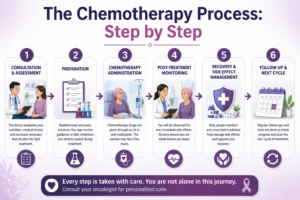
Chemotherapy can be given in different ways, but the most common method is through an intravenous (IV) line.
1. Administration
The drug is delivered into the bloodstream through a vein, usually in the arm or through a special device like a port or catheter. Some chemotherapy drugs may also be given orally in tablet form.
2. Treatment Cycles
Chemotherapy is not given continuously. Instead, it is administered in cycles, which include:
- A treatment period (one or more days)
- A rest period (to allow the body to recover)
A full course may include several cycles over weeks or months.
3. Monitoring
During treatment, doctors closely monitor the patient’s response through:
- Regular blood tests
- Physical examinations
- Imaging studies
This helps ensure the treatment is working and allows adjustments if needed.
Common Side Effects of Chemotherapy
Side effects vary depending on the type of drugs used and individual patient factors. Some of the most common include:
Hair Loss
Chemotherapy can affect hair follicles, leading to partial or complete hair loss. This is usually temporary.
Fatigue
Many patients experience extreme tiredness due to the impact on the body’s cells.
Nausea and Vomiting
Modern medications help control these symptoms effectively.
Low Blood Counts
Chemotherapy can reduce the production of:
- Red blood cells (causing anemia)
- White blood cells (increasing infection risk)
- Platelets (leading to bleeding issues)
Loss of Appetite
Changes in taste and reduced appetite are also common.
Managing Side Effects
Doctors provide supportive care to minimize discomfort during chemotherapy:
- Anti-nausea medications
- Nutritional guidance
- Growth factors to boost blood cell production
- Infection prevention measures
Patients are encouraged to:
- Stay hydrated
- Eat balanced meals
- Get adequate rest
- Report any unusual symptoms immediately
With proper care, many side effects can be controlled effectively.
Emotional and Psychological Impact
Chemotherapy is not just physically demanding—it can also be emotionally challenging. Patients may experience:
- Anxiety or fear
- Mood changes
- Stress about treatment outcomes
Support from family, friends, and healthcare professionals plays a crucial role. Counseling and support groups can also help patients cope better.
Life During Chemotherapy
Many patients can continue some of their daily activities during treatment, depending on how they feel. However, adjustments may be needed:
- Avoid crowded places to reduce infection risk
- Maintain good hygiene
- Follow a doctor-recommended diet
- Balance activity with rest
It is important to listen to your body and not push beyond your limits.
Advances in Chemotherapy
Modern chemotherapy has become more targeted and effective, with fewer side effects compared to earlier treatments. In many cases, it is combined with:
- Targeted therapy
- Immunotherapy
These advancements have significantly improved survival rates and quality of life for patients with blood cancers.
Recovery After Chemotherapy
After completing chemotherapy, the body gradually begins to recover. Hair regrowth, improved energy levels, and normalization of blood counts usually occur over time.
Regular follow-ups are essential to:
- Monitor recovery
- Detect any recurrence early
- Manage long-term side effects
Conclusion
Chemotherapy remains a cornerstone of treatment in haemato-oncology. While it may seem intimidating, understanding what really happens during chemotherapy can help reduce fear and build confidence. With proper medical care, emotional support, and awareness, patients can navigate this journey more comfortably.
Early diagnosis, timely treatment, and a positive mindset can make a significant difference in outcomes. If you or your loved one is experiencing symptoms or preparing for treatment, it is important to consult a trusted specialist at the right time. If you are searching for blood cancer treatment near me, make sure you choose the best doctor with expertise in hematology-oncology, along with a well-equipped hospital for effective and safe treatment.