

Fever is one of the most common symptoms of infection and is particularly frequent during the monsoon season. In cities like Hyderabad, changing weather conditions, mosquitoes, and contaminated food or water can increase the risk of several infections. When someone develops a high fever, headache, body pain, weakness, or stomach discomfort, it can be difficult to know whether the cause is dengue, viral fever, or typhoid.
These three conditions may have similar symptoms, but they are caused by different organisms and may require different approaches to diagnosis and treatment. Understanding their differences can help you recognize warning signs and seek medical attention at the right time.
What Causes Dengue, Viral Fever and Typhoid?
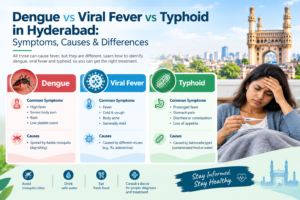
The first major difference between these illnesses is their cause.
Dengue is a viral infection caused by the dengue virus. It is primarily spread through the bite of infected Aedes mosquitoes. These mosquitoes can bite during the daytime as well as at other times.
Viral fever is a general term rather than the name of one specific disease. Several different viruses can cause fever along with symptoms such as body aches, tiredness, cough, cold, sore throat, or digestive symptoms.
Typhoid fever is a bacterial infection caused by Salmonella Typhi. It is commonly transmitted through food or water contaminated with the bacteria.
Because the symptoms overlap, it is not always possible to determine the exact cause of fever simply by looking at symptoms. A doctor may recommend specific blood tests or other investigations depending on the patient’s condition.
Dengue Symptoms
Dengue is a mosquito-borne viral infection that can range from a mild illness to a severe condition requiring hospitalization.
Common symptoms of dengue may include:
- Sudden or high fever
- Severe headache
- Pain behind the eyes
- Muscle and joint pain
- Nausea
- Vomiting
- Skin rash
- Weakness and fatigue
Some people may experience mild symptoms, while others can develop more serious complications.
One important point about dengue is that the period when the fever starts to decrease does not always mean that the illness is completely over. Warning signs can develop around this stage, which is why medical monitoring may be important in suspected cases.
Warning Signs of Severe Dengue
People with suspected dengue should seek urgent medical attention if they develop symptoms such as:
- Severe abdominal pain
- Persistent vomiting
- Bleeding from the nose or gums
- Blood in vomit or stool
- Rapid breathing
- Extreme weakness
- Restlessness
- Pale or cold skin
- Excessive thirst
Severe dengue can become life-threatening if not recognized and managed promptly.
What Is Viral Fever?
Viral fever refers to fever caused by a viral infection. Since many different viruses can cause fever, the symptoms can vary significantly from one person to another.
Common symptoms may include:
- Fever
- Headache
- Body aches
- Fatigue
- Chills
- Sore throat
- Cough
- Runny or blocked nose
- Reduced appetite
- Nausea or vomiting
Many viral infections improve with rest, adequate fluids, and supportive treatment. However, not every fever should automatically be considered a simple viral fever.
If the fever persists, becomes severe, or is accompanied by unusual symptoms, medical evaluation is recommended. Depending on the symptoms and clinical examination, a doctor may need to rule out dengue, typhoid, malaria, or other infections.
Typhoid Fever Symptoms
Typhoid fever is a bacterial infection caused by Salmonella Typhi. It is usually associated with contaminated food or water.
The symptoms of typhoid may include:
- Persistent fever
- Headache
- Weakness and fatigue
- Abdominal discomfort or pain
- Loss of appetite
- Constipation
- Diarrhoea
- Nausea
- Cough in some cases
Some people may develop a skin rash consisting of small, flat, rose-coloured spots.
Without appropriate treatment, typhoid can lead to serious complications. Since it is a bacterial infection, antibiotics may be required. However, antibiotics should only be taken under medical supervision because the choice of antibiotic depends on the individual case and local antibiotic resistance patterns.
Dengue vs Viral Fever vs Typhoid: Key Differences
Although there is some overlap between the symptoms, there are useful differences to understand.
1. Cause
Dengue is caused by a virus and transmitted by mosquitoes.
Viral fever can be caused by many different viruses.
Typhoid is caused by Salmonella Typhi, a bacterium, and is generally spread through contaminated food or water.
2. Fever Pattern
Dengue commonly causes a sudden high fever.
Viral fever can cause mild, moderate, or high fever depending on the underlying virus.
Typhoid can cause persistent fever that may continue for several days if untreated.
However, fever patterns alone cannot confirm a diagnosis.
3. Body Pain
Significant muscle and joint pain is commonly associated with dengue. Viral infections can also cause body aches, while body pain may occur in typhoid as well.
4. Stomach Symptoms
Nausea and vomiting may occur with dengue and viral infections. Typhoid can cause abdominal discomfort, constipation, or diarrhoea.
5. Rash
A rash may occur in dengue. Some viral infections can also cause rashes. In typhoid, a characteristic rash may occur in some patients, although it is not present in everyone.
6. Mosquito Exposure
A history of mosquito exposure can increase suspicion of dengue, particularly in areas where dengue transmission occurs.
However, mosquito exposure alone does not mean that a person has dengue.
What Tests Are Used?
The tests required depend on the patient’s symptoms, duration of fever, medical history, physical examination, and the doctor’s clinical suspicion.
For suspected dengue, doctors may recommend dengue-specific blood tests. A complete blood count (CBC) may also be performed to monitor parameters such as platelet and white blood cell counts.
However, it is important to remember that a low platelet count does not automatically mean dengue. Platelets can decrease for several different reasons, and test results should always be interpreted by a healthcare professional.
For suspected typhoid, laboratory testing may be recommended to help confirm the infection. The choice of test depends on the patient’s condition and the stage of illness.
For viral fever, specific testing may or may not be necessary. If a particular viral infection is suspected, the doctor may recommend an appropriate test.
Why Self-Diagnosis Can Be Risky
One of the biggest mistakes people make when they develop a fever is assuming that it is “just viral fever.”
Dengue, typhoid, malaria, and other infections can initially present with similar symptoms. Taking medicines without knowing the cause may delay appropriate treatment.
For example, antibiotics do not treat viral infections. Similarly, suspected dengue requires appropriate medical monitoring rather than simply treating the fever at home.
Therefore, if fever is persistent, severe, or associated with warning signs, consulting a doctor is the safest approach.
When Should You Consult a Doctor?
You should seek medical evaluation if:
- Fever continues for several days
- Fever is very high or keeps returning
- You experience severe body pain or weakness
- You have persistent vomiting
- You develop severe abdominal pain
- You notice unusual bleeding
- You have difficulty breathing
- You experience severe dehydration
- You become unusually sleepy, confused, or restless
- Your symptoms are getting worse rather than better
Children, older adults, pregnant women, and people with underlying health conditions may require particular attention when they develop persistent fever.
How Can You Prevent These Infections?
Preventing dengue starts with controlling mosquito breeding and avoiding mosquito bites. Do not allow stagnant water to collect in containers, flowerpots, coolers, tyres, or other areas around your home.
Use mosquito repellents, protective clothing, window screens, and other appropriate measures to reduce mosquito exposure.
To reduce the risk of typhoid and other food- and water-borne infections:
- Drink safe and clean water.
- Wash your hands regularly.
- Eat freshly prepared food.
- Wash fruits and vegetables properly.
- Avoid food from unhygienic sources.
- Maintain good kitchen and food-handling hygiene.
Good hand hygiene and respiratory precautions can also help reduce the spread of many viral infections.
Final Takeaway
Dengue, viral fever, and typhoid may have similar symptoms, but they are different infections that require proper diagnosis and appropriate treatment. If you or your family member has persistent fever, severe weakness, vomiting, abdominal pain, or other concerning symptoms, timely medical evaluation is important.
If you are looking for a best hospital in Hyderabad for fever evaluation, diagnostic tests, and appropriate medical care, consulting an experienced healthcare team can help you receive the right guidance at the right time.
Don’t ignore persistent fever. Book an appointment with our doctors today for a proper evaluation and personalized medical advice.