

The shoulder blade is the most typical condition that is treated regularly in the field of orthopedics. The shoulder blade, which is medically referred to as the scapula, plays an important role in the movement of the arm, posture, and upper body stability. If pain is present around the shoulder blade, it could severely affect daily activities like lifting or reaching, sitting, or even sleeping.
In orthopedic treatment, shoulder blade pain is assessed carefully to determine if the cause is from joints, muscles, or nerves; the cervical spine; or any of the adjacent structures. Early diagnosis and appropriate treatment help prevent chronic pain and complications that can last for a long time.
Understanding the Shoulder Blade in Orthopedics

The scapula, also known as a triangular bone, lies in the back of the upper part. It is connected to:
-
The clavicle (collarbone)
-
Humerus (upper arm bone)
The shoulder blade is supported by several muscles, including the trapezius, rhomboids, serratus anterior, and rotator cuff muscles. Any injury, imbalance, or degeneration of these structures can cause shoulder pain.
Orthopedic specialists are focused on identifying structural and mechanical reasons for discomfort in this area.
Symptoms of Shoulder Blade Pain
In orthopedic cases, the signs could vary based on the cause.
1. Dull Aching Pain
Common in muscle strains or posture-related issues.
2. Sharp or Localized Pain
Commonly, joint problems are associated with muscle tears, joint dysfunction, or nerve irritation.
3. Pain During Movement
The arm may be uncomfortable when it is lifted, turning the neck, or doing overhead tasks.
4. Stiffness and Reduced Mobility
Neck or shoulder movement is restricted due to muscle tightness.
5. Radiating Pain
A throbbing pain in the shoulder, neck, or arm can suggest cervical spine problems.
Shoulder blade pain coupled with weakness, numbness, or chest pain requires an immediate medical examination.
Orthopedic Causes of Shoulder Blade Pain
Orthopedic specialists typically find the following reasons:
1. Muscle Strain or Overuse
One of the most frequently cited causes. It occurs due to:
-
Heavy lifting
-
Sudden movements
-
Long-term computer use
-
Poor posture
2. Poor Posture and Sedentary Lifestyle
The rounded shoulders and forward head postures strain the upper back muscles, which can lead to chronic scapular pain.
3. Cervical Spine Disorders
An evaluation of the orthopedics may provide:
-
Herniation of the cervical disc
-
Cervical spondylosis
-
Compression of the nerve
These conditions could cause pain in the shoulder blade.
4. Rotator Cuff Injuries
Inflammation or tears in the rotator cuff area can result in discomfort that can radiate to the scapular area.
5. Scapular Dyskinesis
Asymmetry in movement or the position of the shoulders as a result of an imbalance in the muscles. This is most often seen in office workers and athletes.
6. Joint Degeneration
The shoulder joint, also known as the acromioclavicular joint, may manifest as pain or discomfort in the shoulder blade.
7. Trauma or Fracture
Sports injuries, falls, or accidents could be the cause of:
-
Fractures of the scapula
-
Ligament sprains
-
Tears in the muscles
This requires immediate orthopedic examination.
Diagnosis in Orthopedic Practice
The diagnosis of orthopedics requires a planned method.
1. Detailed Medical History
The doctor assesses:
-
Nature of pain and the duration
-
Daily activities and occupations
-
A history of injury
-
The symptoms are often related.
2. Physical Examination
An orthopedic examination consists of:
-
Tests for range of motion
-
Evaluation of muscle strength
-
Posture assessment
-
The palpation of tender regions
-
Special tests for orthopedics
3. Imaging Studies
If necessary, investigations could include:
-
X-rays are used to rule out fractures or arthritis
-
MRI to determine the condition of discs and soft tissues
-
CT scan for precise bone analysis
-
Ultrasound to treat tendon injuries
The accuracy of diagnosis allows for targeted treatment.
Orthopedic Treatment Options
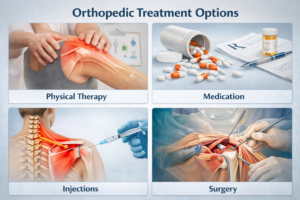
The treatment is based on the extent and nature of the disease.
1. Conservative Management
The majority of shoulder blade pain can be relieved by non-surgical treatments.
-
Rest and modification of activity
-
Anti-inflammatory medicines
-
Therapy with heat or Ice
2. Physical Therapy
The main focus of rehabilitation for orthopedics is
-
Correction of posture
-
Stabilizing the scapula by strengthening
-
Stretching muscles tight
-
Strengthening the core
Physical therapy plays a significant role in long-term recovery.
3. Ergonomic Correction
Adjusting the height of the workstation along with chair support and the computer’s location can help prevent recurrence.
4. Injection Therapy
In certain instances, corticosteroid injections can be used to decrease pain and inflammation.
5. Advanced Orthopedic Interventions
For extreme cases, such as:
-
Significant disc herniation
-
Large tear in the rotator tendon
-
Fractures
A surgical procedure is sometimes considered.
Prevention Strategies in Orthopedics
Orthopedic specialists advise:
-
Maintaining a straight posture
-
Regular stretching exercises
-
Strengthening upper back muscles
-
Avoiding sitting for too long
-
Proper lifting techniques
Preventive treatment reduces the likelihood of recurrence and chronic pain.
When to Consult an Orthopedic Specialist
Consult an orthopedic doctor if:
-
It continues to ache for longer than one week
-
Pain worsens despite rest
-
There is numbness, weakness, or apathy
-
The movement is restricted
-
Pain follows trauma
An early orthopedic intervention can speed up recovery and avoid any problems.
Recovery and Outlook
If properly treated, the majority of situations of shoulder pain will resolve within a couple of weeks. For chronic cases, it is necessary to develop rehabilitation programs. Surgery cases usually require a longer time to recover, but they can yield great long-term results.
The patient’s compliance with physiotherapy and correcting posture significantly enhances the results.
Why Choose Our Orthopedic Care?
At Avasa Hospital, our expert orthopedic specialists provide advanced diagnosis and personalized treatment for shoulder blade pain. We use modern imaging, evidence-based therapies, and patient-centered rehabilitation programs.
👉 Learn more: www.avasahospital.com
📞 Book Your Consultation Today
Conclusion
The pain of the shoulder blade is a frequent condition that is frequently treated with orthopedic practice. Although many of the cases are due to muscle strain and poor posture, a few may be caused by joint or spinal issues that require specialist care.
An accurate diagnosis, timely orthopedic treatment, and appropriate rehabilitation can help relieve the pain and help restore functionality. If you are experiencing shoulder pain that is persistent or interferes with your everyday activities, seeking out an orthopedic surgeon is the best option for safe and efficient rehabilitation.