

For many patients diagnosed with blood cancers or serious blood disorders, a transplant can offer the best chance of long-term recovery or even a cure. During treatment, you may hear the terms Stem Cell Transplant and Bone Marrow Transplant (BMT) used interchangeably, leading to confusion about whether they are the same procedure or different treatments.
The truth is that both procedures have the same goal—to replace damaged or diseased blood-forming stem cells with healthy ones—but they differ in where the stem cells are collected from and how they are transplanted.
Understanding the differences between a stem cell transplant and a bone marrow transplant can help patients and families make informed decisions about treatment. This guide explains how each procedure works, who may need one, their benefits, risks, recovery process, and what to expect before and after transplantation.
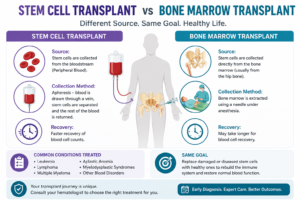
What Is a Stem Cell Transplant?
A stem cell transplant is a medical procedure that replaces damaged or destroyed blood-forming stem cells with healthy stem cells. These stem cells develop into healthy red blood cells, white blood cells, and platelets that are essential for carrying oxygen, fighting infections, and preventing bleeding.
Most stem cell transplants today use peripheral blood stem cells, which are collected from the donor’s bloodstream rather than directly from the bone marrow. This has become the most common method because it is less invasive and allows for faster recovery of blood cell production.
What Is a Bone Marrow Transplant?
A bone marrow transplant (BMT) is a type of stem cell transplant in which healthy stem cells are collected directly from the donor’s bone marrow. Bone marrow is the soft, spongy tissue found inside large bones such as the hip bones, where blood cells are produced.
During the donation procedure, stem cells are removed using special needles while the donor is under anesthesia. These healthy cells are then infused into the recipient to rebuild healthy bone marrow and restore normal blood cell production.
Although the collection method is different, both bone marrow transplants and stem cell transplants work toward the same treatment goal.
Stem Cell Transplant vs Bone Marrow Transplant: Key Differences
| Feature | Stem Cell Transplant | Bone Marrow Transplant |
|---|---|---|
| Stem cell source | Bloodstream (Peripheral Blood) | Bone marrow |
| Collection method | Blood is collected using a machine (apheresis) | Stem cells are collected from the hip bone under anesthesia |
| Surgery required | No | Yes (for the donor) |
| Recovery of blood counts | Usually faster | May take slightly longer |
| Most commonly used today | Yes | Used in selected cases |
The main difference lies in how the healthy stem cells are collected, not in the purpose of the transplant.
Why Are These Transplants Needed?
Doctors recommend transplantation when the bone marrow cannot produce healthy blood cells or when cancer treatments have severely damaged the bone marrow.
Conditions that may require transplantation include:
- Leukemia
- Lymphoma
- Multiple Myeloma
- Aplastic Anemia
- Myelodysplastic Syndrome (MDS)
- Myelofibrosis
- Certain inherited blood disorders
- Some immune deficiency disorders
For many patients, transplantation offers the possibility of long-term disease control or cure.
Types of Stem Cell Transplants
Autologous Stem Cell Transplant
In an autologous transplant, the patient’s own healthy stem cells are collected before receiving high-dose chemotherapy or radiation. After treatment, the stored stem cells are returned to the body to restore normal blood cell production.
This type is commonly used for:
- Multiple Myeloma
- Certain lymphomas
Benefits include:
- Lower risk of rejection
- No donor required
- Lower chance of graft-versus-host disease (GVHD)
Allogeneic Stem Cell Transplant
An allogeneic transplant uses stem cells from another person whose tissue type closely matches the patient.
The donor may be:
- A brother or sister
- Another family member
- An unrelated volunteer donor
- Umbilical cord blood donor
This transplant is commonly recommended for:
- Leukemia
- Aplastic Anemia
- Myelodysplastic Syndrome
- Myelofibrosis
How Are Stem Cells Collected?
Peripheral Blood Stem Cell Collection
The donor receives medications for several days to increase the number of stem cells circulating in the bloodstream.
A machine called an apheresis machine separates stem cells from the blood while returning the remaining blood components to the donor.
This procedure usually takes several hours and does not require surgery.
Bone Marrow Collection
Bone marrow donation is performed in an operating room under general or regional anesthesia.
Doctors insert special needles into the pelvic bone to collect bone marrow containing healthy stem cells.
The donor usually goes home the same day or after a short observation period.
Which Procedure Is Better?
Neither procedure is universally better. The choice depends on several factors, including:
- Type of disease
- Patient’s age
- Overall health
- Availability of a suitable donor
- Risk of complications
- Physician’s recommendation
Peripheral blood stem cell transplants are now more common because they often lead to faster recovery of blood counts. However, bone marrow transplants may be preferred for certain conditions to reduce the risk of chronic graft-versus-host disease.
Preparing for a Transplant
Before transplantation, patients undergo a detailed medical evaluation that may include:
- Blood tests
- Bone marrow examination
- Heart evaluation
- Lung function tests
- Infection screening
- Imaging studies
- Donor matching (for allogeneic transplant)
Patients also receive counseling regarding the procedure, possible risks, and recovery expectations.
What Happens During the Transplant?
Contrary to what many people believe, a stem cell transplant is not a major surgery for the recipient.
The healthy stem cells are infused into the bloodstream through an intravenous (IV) line, similar to receiving a blood transfusion.
Once inside the body, the stem cells naturally travel to the bone marrow, where they begin producing new healthy blood cells.
Recovery After Transplant
Recovery varies from patient to patient.
Initially, blood counts remain low because the transplanted stem cells need time to establish themselves in the bone marrow.
Patients are closely monitored for:
- Infection
- Bleeding
- Fever
- Organ function
- Blood counts
Most patients remain under careful medical supervision for several weeks or months after transplantation.
Benefits of Stem Cell and Bone Marrow Transplant
These procedures can:
- Replace diseased bone marrow
- Restore healthy blood cell production
- Improve immune function
- Treat certain blood cancers
- Offer long-term remission
- Potentially cure several serious blood disorders
For eligible patients, transplantation may provide the best chance for long-term survival.
Risks and Possible Complications
Like any advanced medical treatment, transplantation carries risks.
Possible complications include:
- Infection
- Bleeding
- Low blood counts
- Organ damage
- Graft-versus-host disease (GVHD)
- Delayed recovery
- Fatigue
- Infertility (in some patients)
The transplant team closely monitors patients to identify and manage complications as early as possible.
Life After Transplant
Recovery continues even after leaving the hospital.
Patients are encouraged to:
- Eat a nutritious diet
- Practice good hygiene
- Avoid infections
- Take prescribed medications
- Attend regular follow-up visits
- Stay physically active as advised by their doctor
Most patients gradually regain strength over several months, although complete recovery may take longer depending on the underlying condition.
When Should You Consult a Hematologist?
You should seek specialist evaluation if you experience:
- Persistent fatigue
- Frequent infections
- Easy bruising or bleeding
- Unexplained fever
- Swollen lymph nodes
- Persistent anemia
- Abnormal blood test results
- A diagnosis of leukemia, lymphoma, or another blood disorder
Early consultation helps determine whether advanced treatments such as stem cell transplantation may be appropriate.
Final Thoughts
Choosing between a stem cell transplant and a bone marrow transplant depends on several factors, including your diagnosis, overall health, and the advice of an experienced hematology specialist. Understanding the differences between these procedures can help you make informed decisions and prepare for the treatment journey with confidence.
If you or a loved one has been diagnosed with a blood disorder or blood cancer, don’t delay seeking expert medical care. Search for trusted hospitals near me that offer advanced hematology and transplant services, and consult the best hematologist in India for a comprehensive evaluation and personalized treatment plan. Early diagnosis and timely treatment can make a significant difference in outcomes. Book an appointment with an experienced hematologist today to discuss your condition, explore the most suitable transplant options, and receive expert care every step of the way.