

Chest pain is among the most frequently reported health problems encountered by all ages. A lot of people are uncertain whether their discomfort is due to acidity or heart attacks. Since both can trigger similar symptoms like chest burning sensations, pain, and discomfort, knowing the difference is vital. While acidity can be linked to digestive issues, a heart attack is an emergency medical situation that needs immediate attention.
Many people overlook warning signs, believing they’re suffering from acidity or gas. This mistake can delay the proper treatment when suffering from an attack on the heart. Understanding the signs of a heart attack and acidity can assist patients in seeking medical treatment when they need to and prevent life-threatening complications.
What Is Acidity?
Acidity is when stomach acid is pushed back to the alimentary pipe leading to irritation and an uncomfortable burning sensation within the chest. This condition is generally referred to in the form of acid reflux, or GERD. Acidity can be due to poor eating habits and spicy foods; stress; irregular eating habits; and weight gain, as well as digestive issues.
People who consume a lot of oily food items and junk foods, such as tea, coffee, and carbonated drinks, as well as alcohol, are probably more likely to suffer from acidity issues. Stress and sleep deprivation can exacerbate symptoms.
A very frequent acidity sign is a burning sensation that occurs in the chest area, particularly after eating a heavy meal. The discomfort can increase while sitting down or bent towards the front. There are also people who suffer from gas formation, bloating, nausea, burping, or a sour taste in the mouth.
The chest pain associated with acidity is usually mild to moderate, and it can improve following the use of antacids and drinking water. But, the recurring symptoms of acidity must not be ignored since long-term acid reflux can harm the esophagus and cause digestive problems.
What Is a Heart Attack?
A heart attack happens when the blood flow to the heart muscles is blocked because of a narrowing or blockage in blood vessels. In the absence of enough oxygen, the heart muscles begin to be damaged. A heart attack can be an emergency in life that requires immediate medical attention.
These heart attacks have become more frequent due to poor habits of life, such as stress, diabetes, smoking, obesity, high cholesterol, and high blood pressure. Women and men alike may experience symptoms of a heart attack; however, the signs and symptoms can vary from one person to the next.
A lot of people think that heart attack symptoms usually involve extreme chest pain. However, there are some who experience slight discomfort or pressure in the chest. If you ignore these warning signs, it could cause serious harm.
Common Symptoms of Acidity
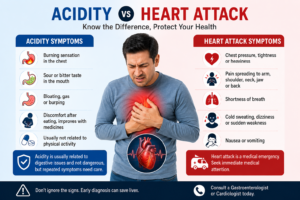
Acidity symptoms are mostly connected to digestive issues and discomfort in the stomach area and chest. The pain typically feels like burning, not tension or tightness.
Acidic people may suffer from chest pain following eating spicy or oily foods. It is also possible to develop an unpleasant or sour flavor in their mouths due to acid reflux. Burping and bloating frequently and stomach heaviness, indigestion, nausea, and stomach heaviness are frequent symptoms.
The pain of acidity is often worse when you eat or lie down. It can be improved by taking acidity medication or abstaining from foods that trigger the condition.
Common Symptoms of a Heart Attack
The symptoms of a heart attack are typically more severe and may involve many body parts. The pain is often felt as tension, heaviness, a squeeze, or tightness around the middle of the chest.
In contrast to acidity, the pain of a heart attack can spread to the left shoulder, arm, or neck, jaw, or even the back. Patients may also experience extreme sweating, breathing difficulties, weakness, dizziness, nausea, or abrupt fatigue.
Breathing problems are one of the main symptoms of heart disease. Many people are unable to breathe well even when lying down. The feeling of cold sweating, even without exercise, is a different symptom that should not be ignored.
Women, older people, and diabetic patients can occasionally suffer from unusual symptoms of a heart attack, such as mild chest pain or weakness, nausea, or lower back pain instead of intense chest pain.
Major Difference Between Acidity and Heart Attack Symptoms
While both can cause chest discomfort, a few differences can aid in determining the cause.
Acidic pain typically feels like burning and is often linked to food. It can improve following the use of anti-inflammatory medications or drinking plenty of water. The discomfort can be felt only in the chest or stomach region.
A heart attack’s pain, on the contrary, is felt more like heaviness or pressure and could be felt in other body parts, such as the shoulder, arm, jaw, or back. The symptoms of a heart attack are often associated with sweating, dizziness, shortness of breath, and weakness.
Another significant distinction is that the symptoms of a heart attack could occur during physical exercise as well as emotional stress, or even while you’re resting. The pain is usually more prolonged and does not get better with antacid medication.
Why People Confuse Acidity With Heart Attack
Many people confuse symptoms of a heart attack with acidity since both conditions result in nausea and chest discomfort. In the beginning, symptoms of a heart attack, such as pain, can be similar to indigestion or gas issues.
Some patients put off appointments with hospitals, believing that the symptoms are caused by acidity that is temporary. The delay could be dangerous as immediate treatment is very crucial in the event of a heart attack.
If chest pains are severe, persistent, and recurring and are accompanied by breathing difficulties or sweating, a medical examination should never be put off.
Risk Factors for Heart Attack
Certain factors raise the chance of suffering from a heart condition and a heart attack.
This includes:
- High blood pressure
- Diabetes
- Smoking
- Obesity
- High cholesterol
- Stress
- Exercise is not enough
- Heart disease is a family-related issue that has a history of familial origin.
Patients with these risk factors shouldn’t avoid breathing or have chest difficulties.
Diagnosis and Medical Evaluation
Doctors may conduct a variety of tests to determine if the symptoms are due to heart disease or acidity.
Common tests typically include ECG, echocardiogram, blood tests, chest X-ray, stress test, and endoscopy. The early diagnosis allows doctors to provide the right treatment and prevent complications.
Regular health checks are essential, especially for people who suffer from high blood pressure, diabetes, or being overweight, or have a family history of heart disease.
Prevention Tips
Lifestyle changes that promote health can lower the risk of acidity and heart health.
Consuming healthy foods as well as avoiding processed foods, regular exercise, maintaining a an ideal body weight and reducing stress levels, quitting smoking cigarettes, and getting adequate rest can greatly improve the health of your digestive system and heart.
Also, avoid excessive eating or eating late at night, as well as the excessive consumption of coffee, tea or alcohol.
When to See a Doctor
Frequent acidity symptoms, chest pain, breathing difficulty, or unexplained discomfort should never be ignored. Consulting the best gastroenterologist or cardiology specialist at the right time can help detect serious conditions early and prevent complications.
If you are looking for advanced acidity treatment, digestive care, or heart health evaluation, it is important to contact the best hospital for accurate diagnosis and effective treatment.
Conclusion
Knowing the distinction between the symptoms of a heart attack caused by acidity is crucial since both can appear identical. Although acidity is usually related to digestive problems, symptoms of heart attacks can be life-threatening if not treated.
A persistent chest discomfort, breathlessness, sweating, arm pain, dizziness, and unusual weakness shouldn’t be overlooked. A prompt diagnosis and prompt medical intervention can save lives and prevent grave complications.