

Water is vital for each process within our body. From controlling body temperature to aiding digestion and ensuring well-functioning organs, water is essential to overall well-being. If the body is losing much more fluids that it absorbs, it causes dehydration. Even mild dehydration can impact your physical endurance, the level of energy, and mental focus. Severe dehydration could be hazardous and requires immediate medical attention.
Knowing how dehydration affects your body can help you avoid serious health issues and boost your general health and well-being.
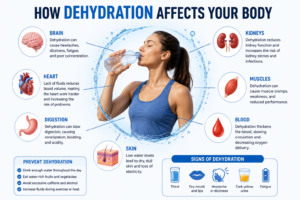
What is Dehydration?
Dehydration occurs when the body doesn’t have enough water to function normally. The body constantly loses fluids by sweating, urinating, breathing, and digestion. The body must replenish these fluids frequently with water and other healthy liquids.
People with dehydration may be affected at all ages; however, youngsters, seniors, and athletes, as well as those who suffer from chronic illness, are more at risk.
Common Causes of Dehydration
There are many factors that can contribute to dehydration due to a variety of factors. Common causes include:
- Insufficient water intake
- Extreme sweating
- Fever
- The vomiting and diarrhea
- Conditions of hot weather
- Physical activity that is intense
- Alcohol or caffeine consumption that is excessive
- Certain medicines
- Diabetic kidney and kidney problems
The body’s requirement for water could cause dehydration symptoms.
Early Signs of Dehydration
The body generally will give warning signs when the levels of fluid begin to decrease. Being aware of these signs early will aid in avoiding problems.
The most common early symptoms are:
- Dry lips and mouth
- More thirst
- Urine that is dark yellow
- Insomnia and fatigue
- Dizziness
- Headache
- The amount of urine produced is reduced.
- Dry skin
Many people do not notice these symptoms until the dehydration becomes more severe.
How Dehydration Affects Your Brain
The brain is extremely sensitive to imbalances in fluid levels. Even slight dehydration could affect cognitive function and performance.
The effects on the brain are:
- It is difficult to concentrate
- Memory issues
- Changes in mood
- Irritability
- Anxiety
- Mental confusion
- A decreased alertness
Studies have shown that dehydration can reduce cognitive performance and impact productivity in the workplace or at school.
Effects of Dehydration on Energy Levels
Water is a vital component in transporting oxygen and nutrients throughout the body. If you don’t have enough fluids, your body can’t produce energy effectively.
The most common causes of dehydration are:
- Constant tiredness
- Muscle weakness
- Stamina loss
- Insufficiency of motivation
- Physical exhaustion
Regular exercisers may be able to notice a decrease in performance and muscle cramps when dehydrated.
How Dehydration Impacts Digestion
Proper hydration is important for healthy digestion. Water aids in breaking down food particles and aids in the smooth flow of stool movements.
Dehydration can cause:
- Constipation
- Acid reflux
- Bloating
- Indigestion
- Stomach discomfort
The lack of fluids can hinder the body’s ability to properly digest food and can cause digestive issues.
Dehydration and Kidney Function
The kidneys depend on water for the removal of toxic substances from the body. A chronic deficiency in water can place stress on the kidneys and increase the likelihood of developing kidney issues.
Potential kidney-related complications may include:
- Kidney stones
- Urinary tract infections
- Kidney function is impaired
- Kidney failure in the most severe of instances
Drinking enough fluids helps to maintain kidney health and helps in removing toxins.
How Dehydration Affects the Heart
The heart functions harder when there is a lack of fluids in the body. The reduced blood volume due to dehydration can impact cardiovascular health and circulation.
The possible effects are:
- Rapid heartbeat
- Low blood pressure
- Poor circulation
- The heart is under increased strain.
Patients with heart problems need to pay attention to their water levels.
Effects of Dehydration on the Skin
The health of your skin is dependent on water intake. Hydration helps maintain the skin’s appearance and elasticity.
Dehydration may cause:
- Dry skin
- Lips cracked by cracks
- Skin irritation
- A dull appearance
- Reduced skin elasticity
Dehydration that is long-term may cause premature ageing of the skin.
Muscle Cramps and Joint Problems
Water is essential for joint and muscle function. Dehydration can affect the balance of electrolytes and cause muscle-related pain.
Common issues include:
- Muscle cramps
- Joint stiffness
- Muscle fatigue
- Physically, they are not performing well.
Outdoor workers and athletes are particularly at risk in hot weather.
Severe Dehydration Symptoms
Dehydration that is severe can be a serious medical issue that is not something to be ignored.
The warning signs comprise:
- Extreme thirst
- Rapid breathing
- Sunken eyes
- There are very few or no urinations
- Confusion
- Fainting
- Rapid heartbeat
- Low blood pressure
Urgent medical attention could be required to restore the fluid balance.
Dehydration in Children
Children lose more fluids than adults, and can be dehydrated in a short time.
The signs of dehydration in children are:
- Dry mouth
- There are no tears in the midst of crying
- Fever
- Sleepiness
- Fewer wet diapers
- Irritability
Parents should be encouraged to maintain a regular consumption of fluids, especially in hot or unwell conditions.
Dehydration in Older Adults
The older adults are often afflicted with less thirst, which makes dehydration more frequent.
Age-related issues are:
- Medical conditions that are chronic
- Medications
- Kidney function is impaired
- It is difficult to access fluids
Dehydration among older adults can raise the chance of falling, confusion, and hospitalization.
How Much Water Should You Drink Daily?
The requirements for water are contingent on the climate, age, physical activity, and health issues.
General guidelines include:
- Men: About 3-4 liters daily
- Women: About 2-3 liters daily
- Consumption increases during exercise or in hot weather
The source of hydration is also soups, fruits, vegetables, and healthy drinks.
Best Foods and Drinks for Hydration
Certain foods have significant amounts of water and help to support water hydration naturally.
Foods that hydrate include:
- Watermelon
- Cucumber
- Oranges
- Strawberries
- Coconut water
- Lettuce
- Tomatoes
Drinks that are healthy include:
- Water
- Electrolyte-rich drinks
- Fresh fruit juices
- Buttermilk
- Herbal teas
Avoid drinking too many sugary drinks and alcohol, as they can exacerbate dehydration.
Tips to Prevent Dehydration
Dehydration prevention is much easier than managing it.
Tips for preventing crime:
- Drink plenty of water throughout the day.
- Keep a water bottle in your bag
- Make sure you drink plenty of fluids when exercising.
- Beware of prolonged exposure to the sun.
- Eat water-rich foods
- Monitor urine color
- Drink extra fluids during illness
Hydration is essential to general health and body function.
When to See a Doctor
Medical attention is often required when symptoms of dehydration become extreme or persist.
Consult a healthcare professional if you experience:
- Constant vomiting or diarrhea
- Severe dizziness
- Confusion
- High fever
- Fainting
- The inability to drink fluids
Early intervention can help prevent severe complications.
Conclusion
Understanding how dehydration affects your body is important for maintaining good health. Water supports every major organ system, including the brain, heart, kidneys, muscles, and digestive tract. Even mild dehydration can reduce energy, concentration, and physical performance.
Staying hydrated through regular water intake and healthy lifestyle habits can protect the body from serious health problems. Recognizing the early signs of dehydration and taking preventive measures can improve overall wellness and quality of life. If you are experiencing severe dehydration symptoms or related health complications, consult the best hospital in Hyderabad for expert medical care and advanced treatment options. Early diagnosis and timely treatment can make a significant difference in recovery. Book an appointment today to receive professional healthcare support and personalized treatment guidance.