

Digestive health plays an important role in maintaining overall well-being. Problems related to the digestive system can affect daily life, nutrition, energy levels, and long-term health. Many digestive disorders begin with mild symptoms such as abdominal pain, acidity, bloating, nausea, vomiting, or difficulty swallowing. However, ignoring these symptoms may lead to serious complications if the underlying condition is not diagnosed early.
One of the most advanced and reliable methods used in modern medicine for identifying digestive disorders is endoscopy. The importance of endoscopy in digestive disease diagnosis has increased significantly because it allows doctors to examine the digestive tract directly and accurately. Endoscopy helps in detecting conditions at an early stage, making treatment more effective and improving patient outcomes.
What Is Endoscopy?
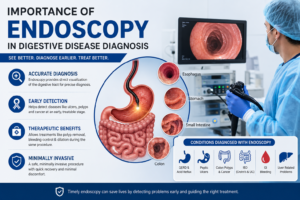
Endoscopy is a medical procedure used to examine the inside of the digestive tract using a thin, flexible tube called an endoscope. The endoscope contains a tiny camera and light source that help doctors visualize internal organs in real time.
The procedure is commonly used to evaluate organs such as:
- Esophagus
- Stomach
- Small intestine
- Colon
- Rectum
Depending on the area being examined, endoscopy may be classified into different types, such as upper GI endoscopy, colonoscopy, sigmoidoscopy, or capsule endoscopy.
The importance of endoscopy in digestive disease diagnosis lies in its ability to provide clear and detailed images of the digestive tract without the need for major surgery.
Why Endoscopy Is Important in Digestive Disease Diagnosis
Digestive diseases often share similar symptoms, making it difficult to diagnose the exact condition through physical examination alone. Blood tests and imaging scans may provide useful information, but endoscopy offers direct visualization of the digestive tract.
Accurate Diagnosis
Endoscopy allows doctors to identify inflammation, ulcers, bleeding, tumors, infections, and abnormal growths with high accuracy. This improves the chances of providing the correct treatment at the right time.
Early Detection of Serious Diseases
One of the key benefits of highlighting the importance of endoscopy in digestive disease diagnosis is early detection. Conditions such as stomach cancer, colon cancer, Barrett’s esophagus, and inflammatory bowel disease can be diagnosed in their early stages before complications develop.
Minimally Invasive Procedure
Endoscopy is less invasive compared to traditional surgical methods. Most procedures are completed within a short duration, and patients can often return home the same day.
Helps in Biopsy Collection
During endoscopy, doctors can collect small tissue samples called biopsies. These samples are examined under a microscope to confirm infections, inflammation, cancer, or other abnormalities.
Therapeutic Benefits
Endoscopy is not only useful for diagnosis but also for treatment. Doctors can remove polyps, stop internal bleeding, dilate narrowed areas, or remove foreign objects during the same procedure.
Common Digestive Diseases Diagnosed Through Endoscopy
The importance of endoscopy in digestive disease diagnosis becomes clearer when understanding the variety of conditions it can detect.
Gastroesophageal Reflux Disease (GERD)
Patients with chronic acidity, heartburn, and regurgitation may undergo endoscopy to identify inflammation or damage in the esophagus caused by acid reflux.
Peptic Ulcers
Endoscopy helps detect ulcers in the stomach or duodenum and identify their severity.
Gastritis
Inflammation of the stomach lining can be evaluated accurately using upper GI endoscopy.
Celiac Disease
Endoscopy with biopsy helps diagnose gluten-related intestinal damage in patients with chronic diarrhea and nutritional deficiencies.
Colon Polyps and Colon Cancer
Colonoscopy is highly effective for detecting and removing colon polyps before they become cancerous.
Inflammatory Bowel Disease (IBD)
Conditions such as Crohn’s disease and ulcerative colitis are diagnosed and monitored through endoscopic evaluation.
Gastrointestinal Bleeding
Endoscopy helps identify the exact source of bleeding in the digestive tract.
Liver-Related Conditions
Certain endoscopic procedures help detect enlarged veins in the esophagus caused by liver disease.
Types of Endoscopy Used in Gastroenterology
Different forms of endoscopy are used depending on the symptoms and affected digestive organs.
Upper Gastrointestinal Endoscopy
This procedure examines the esophagus, stomach, and upper small intestine. It is commonly recommended for patients with:
- Persistent acidity
- Difficulty swallowing
- Vomiting
- Abdominal pain
- Unexplained weight loss
Colonoscopy
A colonoscopy examines the large intestine and rectum. It is widely used for colon cancer screening and evaluating symptoms such as:
- Blood in stool
- Chronic constipation
- Chronic diarrhea
- Abdominal pain
Sigmoidoscopy
This procedure examines the lower part of the colon and rectum.
Capsule Endoscopy
In capsule endoscopy, patients swallow a small capsule containing a camera that captures images of the digestive tract.
Endoscopic Ultrasound (EUS)
This advanced procedure combines endoscopy with ultrasound imaging to evaluate digestive organs and nearby tissues.
Symptoms That May Require Endoscopy
Doctors may recommend an endoscopy if patients experience persistent digestive symptoms such as:
- Chronic acidity
- Difficulty swallowing
- Persistent vomiting
- Blood in vomit or stool
- Unexplained abdominal pain
- Chronic diarrhea
- Severe constipation
- Sudden weight loss
- Persistent bloating
- Iron deficiency anemia
The importance of endoscopy in digestive disease diagnosis becomes critical when these symptoms persist despite medication or lifestyle changes.
How to Prepare for an Endoscopy
Preparation depends on the type of procedure being performed.
Before Upper GI Endoscopy
Patients are usually advised to avoid food and drinks for several hours before the procedure.
Before Colonoscopy
Colon cleansing is necessary to obtain clear images of the intestine. Doctors may recommend a special diet and bowel preparation solution.
Patients should also inform the doctor about:
- Current medications
- Allergies
- Existing medical conditions
- Pregnancy status
Proper preparation improves the accuracy of the procedure and supports effective digestive disease diagnosis.
What Happens During the Procedure?
Most endoscopy procedures are performed under sedation to ensure patient comfort.
The endoscope is inserted through the mouth or rectum, depending on the area being examined. The camera transmits images to a monitor, allowing the doctor to inspect the digestive tract carefully.
If necessary, biopsies or minor treatments may be performed during the procedure. Most patients experience minimal discomfort.
Recovery After Endoscopy
Recovery is generally quick. Patients may feel mild bloating, throat irritation, or drowsiness for a few hours after the procedure.
Doctors usually provide dietary instructions and discuss preliminary findings before discharge. Biopsy results may take a few days.
The minimally invasive nature of the procedure further emphasizes the importance of endoscopy in digestive disease diagnosis and treatment.
Benefits of Endoscopy
Endoscopy offers several advantages in modern gastroenterology.
High Accuracy
Direct visualization improves diagnostic precision.
Early Disease Detection
Serious conditions can be identified before complications arise.
Faster Treatment Planning
Doctors can begin targeted treatment quickly after diagnosis.
Reduced Need for Surgery
Many digestive conditions can be managed without open surgery.
Improved Patient Outcomes
Early diagnosis and treatment reduce complications and support faster recovery.
Risks Associated With Endoscopy
Endoscopy is generally safe when performed by experienced specialists. However, like any medical procedure, there are small risks such as:
- Bleeding
- Infection
- Reaction to sedation
- Perforation of the digestive tract
Serious complications are rare, and most patients undergo the procedure safely.
Role of Advanced Technology in Endoscopy
Modern advancements have improved the effectiveness of endoscopy significantly. High-definition imaging, narrow-band imaging, and artificial intelligence-assisted detection systems help doctors identify abnormalities more accurately.
These innovations continue to strengthen the importance of endoscopy in digestive disease diagnosis by improving precision and reducing diagnostic errors.
Importance of Regular Screening
Regular screening through endoscopy is especially important for individuals with:
- Family history of colon cancer
- Chronic acid reflux
- Long-standing digestive disorders
- Inflammatory bowel disease
- History of colon polyps
Preventive screening helps detect diseases early and improves long-term health outcomes.
Conclusion
The importance of endoscopy in digestive disease diagnosis continues to grow with advancements in modern gastroenterology. Early detection of digestive disorders through endoscopy helps doctors provide accurate treatment, prevent complications, and improve overall patient outcomes. From acidity and ulcers to colon cancer and inflammatory bowel disease, endoscopy plays a major role in maintaining digestive health.
If you are experiencing persistent digestive symptoms, consulting specialists at the best hospital for gastroenterology care can help ensure a timely diagnosis and advanced treatment. For expert consultation, advanced endoscopy services, and personalized digestive care, contact experienced gastroenterology specialists today. For appointments and more information, use the contact details provided by your healthcare center to receive the right medical guidance at the right time.